
Digant Sharma
Cultural and Heritage Ambassador
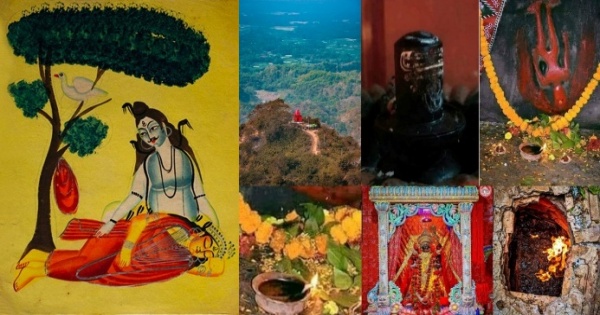
An educational and devotional introduction to the fifty-one Shakti Peethas, the divine geography of Goddess Sati, and the singular significance of the sacred sites within Bangladesh.
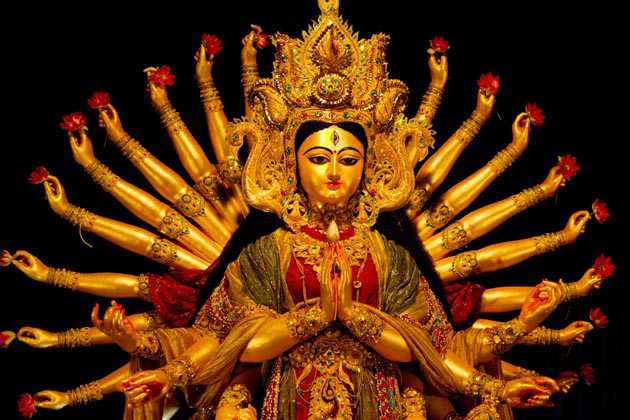
Long before the Peethas existed as places upon the earth, they existed as a sorrow within the heart of the Lord.
When Goddess Sati — the daughter of Daksha Prajapati and the consort of Shiva — cast her body into the sacrificial fire to honour the dignity of her beloved, the Cosmos itself was struck silent. Shiva, mad with grief, took her lifeless form upon his shoulder and began the Tandava — the cosmic dance that threatened to unmake creation.
To restore balance, Vishnu released the Sudarshan Chakra, which dissolved Sati’s body into fragments. Wherever a fragment fell upon the earth, that ground became sanctified for all time. From these fragments arose the fifty-one Shakti Peethas — the seats of the Goddess.
The Peethas extend from Hinglaj in modern-day Pakistan to Manas in Tibet, from Kamakhya in Assam to Nainativu in Sri Lanka.
Each Peeth corresponds to a relic — a finger, an eye, a tongue, the navel, the soles of the feet — and to a presiding form of the Goddess and a guardian Bhairava (a fierce manifestation of Shiva). The Peethas are catalogued in scriptures such as the Pithanirnaya Tantra, the Devi Bhagavata Purana, the Pithamala Tantra, and the Tantra Chudamani, with traditions varying among schools.
Bangladesh holds a particularly luminous concentration of these Peethas — a gift of the deltaic geography of Bengal which once formed the cultural heartland of Tantric Shakta practice in eastern India.
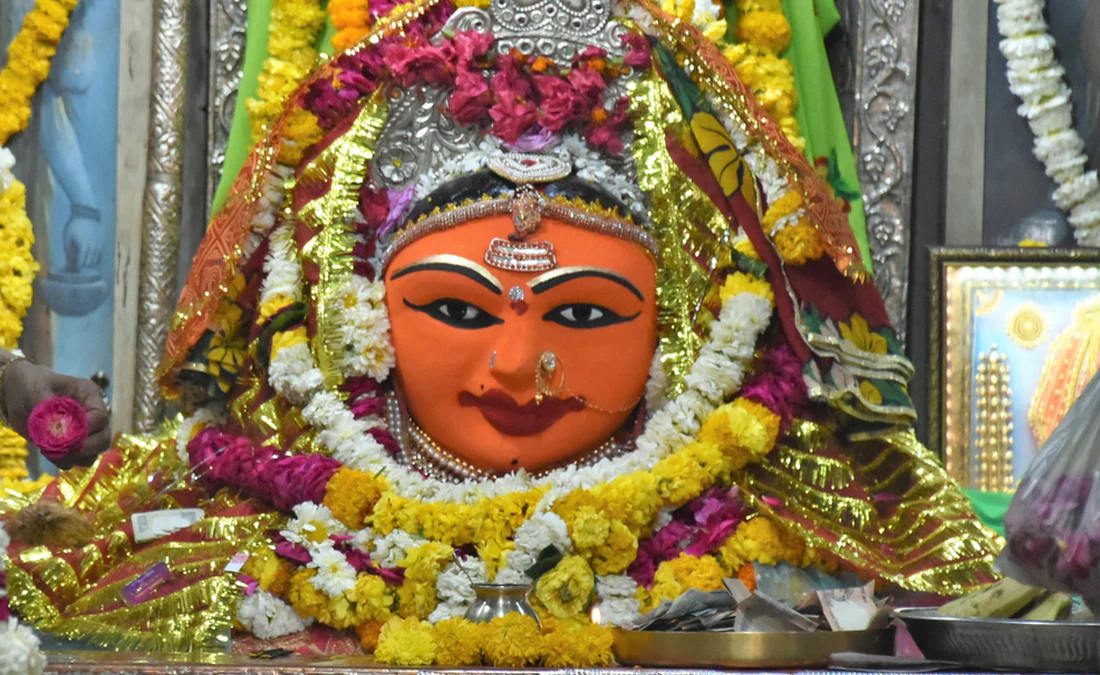
Beyond geography, the Peethas are an inner cartography — a map of how the Divine becomes accessible to the human heart.
Each Peeth is a vortex of shakti — the primordial feminine energy that animates the cosmos.
Sacred fields where the Tantric traditions of Devi worship were preserved across centuries of esoteric practice.
Anchors of a transcontinental pilgrim circuit binding regions and communities into a single fabric of devotion.
Repositories of myth, sculpture, ritual and song — sustaining the inheritance of the Devi for all generations.
For the Tantric and Shakta traditions, the Peethas are not memorials of a death, but stations of an awakening.
In the Devi traditions of Bengal, Assam and beyond, the Goddess is not a consort but the supreme principle — Adi Shakti. Her body upon the earth is the body of the world. The Peethas are therefore the limbs of a living cosmos, and pilgrimage to them is an act of recognition: the devotee perceives that their own body, too, is a Peeth, that the Goddess dwells within. In this radical interior turn lies the heart of Shakta wisdom.
Bangladesh, situated in this ancient Bengal heartland, became one of the most active grounds for this living transmission — preserved through dynasties, monastic orders and humble village priests alike.
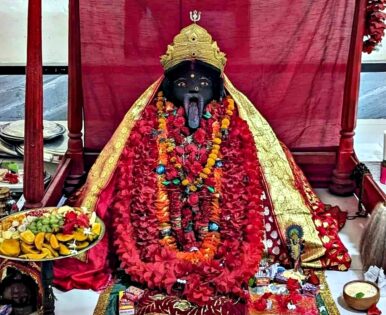
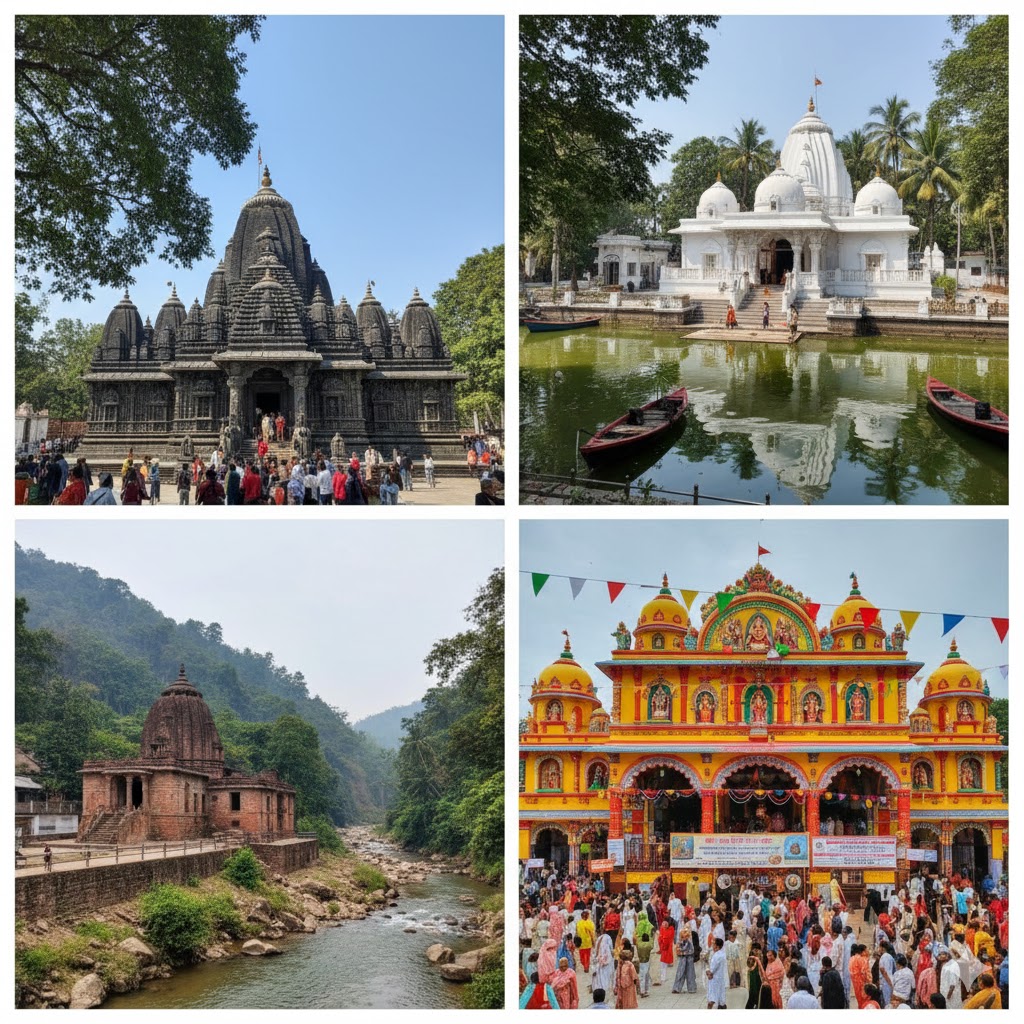
For centuries, ascetics and householders alike journeyed in circuits known as the Peetha-yatra — visiting Kamakhya in the east, Tarapith and Kalighat in the centre, and the Bangladesh Peethas in the eastern reaches. These were not mere sightseeing trails but disciplined acts of inner cartography, often guided by gurus and recorded in pilgrim manuals.
Even today, the bond between West Bengal’s Shakta culture and the Bangladesh Peethas remains palpable — in shared songs, festival cycles, sculptural styles and the unbroken thread of mantra.
The Bangladesh Shaktipeeths are not isolated relics; they are living centres of a continuous Hindu legacy in the deltaic East — preserved by communities of devotees, custodians and historians who have safeguarded the lineage through every era.
Some sites have hosted devotional ritual since pre-medieval times, predating modern political geographies by many centuries.
The Peethas are central to the Shakta worldview that flowered across undivided Bengal — a worldview that continues in song, festival and ritual.
From hill-top sanctums to deltaic riverside shrines, the temples represent regional Bengali Hindu architectural traditions.
Despite challenges, devout Hindu communities continue daily worship and seasonal festivals at every active Peeth.
The sites unite South Asian devotees in a pilgrimage circuit that transcends modern borders.
Recent decades have seen renewed efforts — governmental, civic and devotional — to conserve these irreplaceable sites.
Cultural and Heritage Ambassador

Regional Youth Engagement & Cultural Affairs
Track-II Diplomacy Strategist | Civilisational Dialogue & Indo–BIMSTEC Integration
Entrepreneur · Social Architect · Nation-Building Strategist
Founder, Torus Group Architect, SAKSHAM Mission Co-Founder, Bangladesh Cultural Heritage Trust
Digant Sharma is an Indian entrepreneur whose two-decade career spans technology, agriculture, financial inclusion, digital governance, legal reform, cultural heritage, and large-scale CSR. As Founder, Chairman, or President of more than thirty organisations under the Torus Group, he has built an integrated ecosystem that has reached over 100,000 tribal and Banjara farmers in Maharashtra, mobilised multi-crore CSR commitments across six initiative streams, and conceptualised SAKSHAM — Sampoorna Aay Kar Suvidha Mission — a sovereign-scale national programme to formalise India’s informal economy by 2029. Detailed information at digantsharma.com.
Mr Sharma’s career evidences the five capabilities required for the proposed Bangladesh partnership: (i) CSR delivery at national scale, demonstrated by the 100,000-farmer programme; (ii) multi-faith cultural-heritage experience, demonstrated by the Buddhist Circuit Expedition and the Ayodhya Ram Leela CSR roles; (iii) Government engagement at the State and Central level, demonstrated by SAKSHAM presentations and three Government awards; (iv) cross-border capital mobilisation, demonstrated by the Hypnotherapy 100-country plan, the Sobhagya Yog Sadhna Mumbai-Stuttgart structure, and the Ophi Technologies India-Finland-Switzerland partnership; and (v) digital and technology backbone, demonstrated by GoIPress and Creaa Designs — directly applicable to the proposed twelve-portal digital platform supporting the Bangladesh programme.
Regional Youth Engagement & Cultural Affairs (BIMSTEC) · Track-II Diplomacy Strategist
Civilisational Dialogue Cultural Geopolitics Indo–BIMSTEC Regional Integration
For the past 18 years, Rahul Laxman Patil has been working in the national interest, promoting social harmony, youth engagement, and regional cooperation across South Asia within the framework of the BIMSTEC region. He works as a Track-II Diplomacy Strategist, contributing to informal diplomatic engagement platforms that support regional integration, people-to-people connectivity, and cultural-geopolitical understanding among BIMSTEC member states.
Strengthening collaborative frameworks between youth networks, cultural institutions, and strategic dialogue platforms across BIMSTEC nations — with emphasis on shared heritage, civilisational continuity, and regional cooperation.
Advancing civilisational dialogue, cultural understanding, and strategic regional integration across the Indo–BIMSTEC space through Track-II diplomacy and youth engagement initiatives.